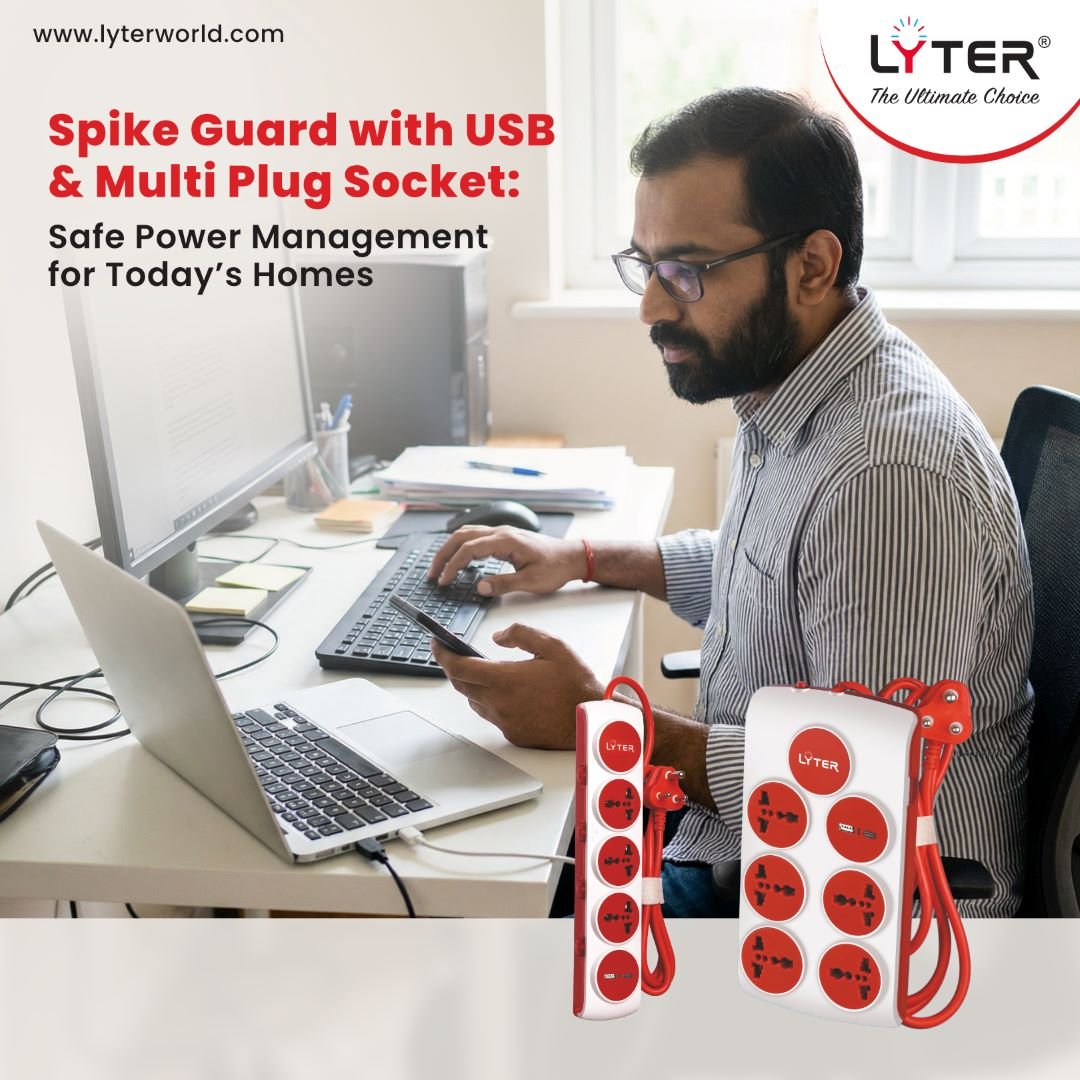

When a sudden voltage spike fries a TV or knocks out a refrigerator, the frustration isn’t just about repair bills; it’s the inconvenience, the disruption, and the feeling that it could’ve been easily prevented. Many homeowners experience this exact pain: appliances acting up after storms, flickering lights, tripped circuits, or mysterious device failures. And without the right surge protector, these issues can snowball into expensive replacements.
Most people assume their regular power strips are enough, but that misconception becomes clear only when an unexpected surge hits. The good news? Selecting the right protection isn’t complicated once you know what really matters.
In this blog, we’ll break down how to choose the right surge protector for your home, what features to look for, and how to ensure long-term protection for your electronic devices without the technical overwhelm.
Why You Need a Surge Protector?
Knowing what a surge protector genuinely protects you from is helpful before making any purchases. Lightning, defective wiring, the on/off of high-power appliances, and even regular voltage fluctuation concerns can all cause voltage spikes. Even though these might not seem like much, repeated micro-surges gradually deteriorate circuits, much like water dropping on a stone.
A good universal power strip or spike guard is not just an additional socket. It protects your gadgets from unexpected surges by absorbing excess voltage, preventing power surges, and guaranteeing plug safety.
Key Things to Look for in a Surge Protector
Choosing the right one isn’t about buying the most expensive model; it’s about buying the right features.
a. Joule Rating: The Real Indicator of Protection
Consider joules to be the “shield strength.” The surge protector’s ability to withstand repeated shocks increases with its joule rating. Aim for at least 600–1000 joules for necessities like routers, gaming consoles, and TVs. Go higher for smart home systems or refrigerators.
b. Number of Outlets & Design (Don’t Just Buy More Sockets)
Purchasing an 8-socket bar is pointless if you only need three devices plugged in. However, having additional outlets helps prevent clutter when designing a desk.
Wider-spaced power strips fit larger plugs without obstructing nearby sockets, so choose these.
c. Overload Protection
This is very important. When too many devices draw power, built-in overload protection guards against overheating and fire. This feature cannot be compromised if your house frequently experiences power spikes or dips.
d. Indicator Lights & Safety Certifications
You should be able to determine when a good surge protector is operating. Seek for indicators that display active protection and grounding status.
Additionally, never compromise on BIS/ISI certification.
e. USB Ports & Smart Features
Modern setups often need USB-C, USB-A, or fast-charging ports. Some of the best power strips in India now come with smart charging, ensuring your devices get stable power without overcharging.
Spike Guard vs. Surge Protector vs. Power Strip: What’s the Difference?
These terms are used interchangeably, but they’re not the same.
- Without any protection, a power strip only increases the number of outlets.
- A spike guard provides basic defense against minor surges.
- A surge protector, however, gives full power surge protection and keeps appliances safe during major voltage irregularities.
Always choose a surge protector over a simple strip if your gadgets are pricey or delicate, such as refrigerators, computers, or smart TVs.
Matching the Surge Protector to the Appliance
Different appliances have different needs:
- Home office setups: Look for robust electronic device protection, USB ports, and high joules.
- Kitchen appliances: Select robust types that are heat-resistant and have overload protection.
- Entertainment systems: Select high-joule units with plug safety and spaced-out sockets.
- General household use: A simple universal power strip with surge protection works perfectly.
When in doubt, choose one that offers a better margin and more safety while supporting a little bit more than your overall load.
When Should You Replace a Surge Protector?
Silently, protection deteriorates. Replace your surge protector if it is more than two to three years old, smells burnt, or has a dead indicator light.
Most significantly, the protector may absorb the impact and lose effectiveness after a significant surge (such as intense lightning).
Get the Best Surge Protector from Lyter
A surge protector is one of those things you don’t think about until something goes wrong. But once you install the right one, you buy peace of mind: fewer damaged appliances, fewer unexpected expenses, and consistent voltage fluctuation safety across your home.
If you want to make better, safer, and more informed choices for your home’s electrical setup, Lyter is here to guide you. Our products are engineered for reliability, built for durability, and designed to protect your home every single day. At Lyter, we don’t just offer solutions, we deliver peace of mind through smarter technology and trusted performance.