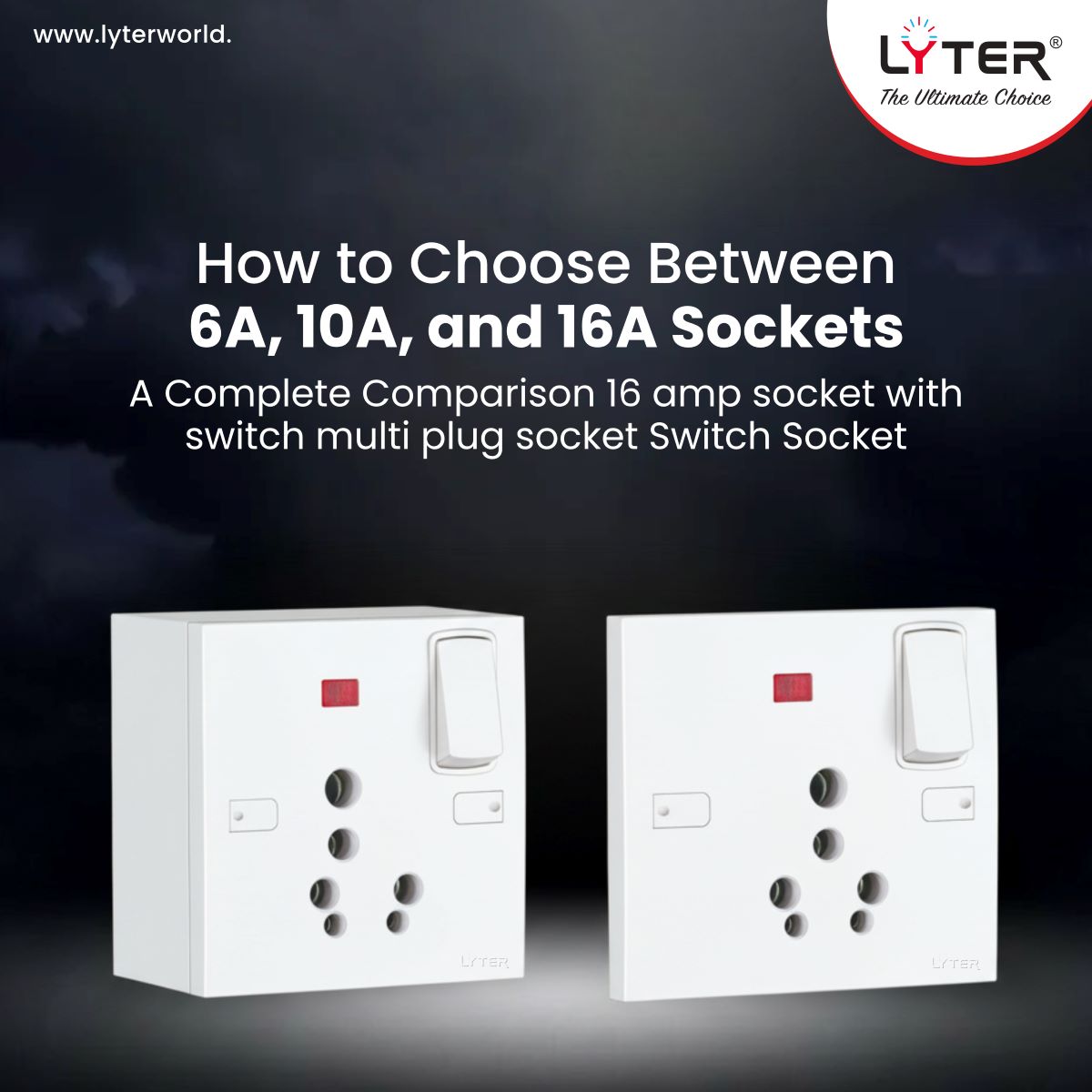
Not all sockets are built for the same purpose. From charging your phone to running heavy appliances, the type of socket you use plays a big role in safety and performance.
Choosing between 6A, 10A, and 16A sockets depends on what you’re powering and how much load your setup needs to handle. In this guide, we’ll break down the differences and help you choose the right one for your space.
What Do 6A, 10A, and 16A Mean?
- 6A socket→ Low power devices
- 10A socket→ Medium load usage
- 16A socket→ High power appliances
The higher the rating, the more power the socket can support.
6A Socket: For Everyday Devices
6A sockets are the most common in homes.
Best for:
- Phone chargers
- Laptops
- TVs
- Small kitchen appliances
Why use it:
They are ideal for low-power devices and regular usage where a heavy load isn’t required.
10A Socket: The Middle Ground
10A sockets are less common but useful for slightly higher load requirements.
Best for:
- Desktop setups
- Medium appliances
- Extended usage devices
Why use it:
They provide a balance between regular and heavy-duty usage.
16A Socket: For Heavy Appliances
16A sockets are designed for high-power usage.
Best for:
- Air conditioners
- Refrigerators
- Microwaves
- Washing machines
Why use it:
A 16 amp socket with switch ensures better control and safety for heavy appliances, especially when used continuously.
Why Using the Right Socket Matters
Using the wrong socket can lead to:
- Overheating
- Loose connections
- Reduced appliance life
- Potential safety risks
A properly rated switch socket ensures stable performance and safe power flow.
Where Multi Plug Sockets Fit In
Sometimes, one socket isn’t enough.
A multi-plug socket allows you to connect multiple devices, but it’s important to:
- Avoid overloading
- Match the total load with the socket capacity
- Use good-quality products
Quick Comparison Table
|
Type |
Load Capacity |
Best Use |
|
6A |
Low |
Chargers, TV, small devices |
|
10A |
Medium |
Desktop setups, moderate appliances |
|
16A |
High |
AC, fridge, heavy appliances |
How to Choose the Right One
Ask yourself:
- What devices will I use?
- How long will they run?
- Do they require high power?
If your setup includes heavy appliances, always go for a 16 amp socket with switch for added safety.
Conclusion
Choosing between 6A, 10A, and 16A sockets isn’t complicated – it’s about matching the socket to your usage.
The right switch socket setup ensures better safety, longer appliance life, and smoother everyday use.
FAQs
Can I use a 6A socket for a heavy appliance temporarily?
It’s not recommended. Even short-term use can cause overheating or damage to both the socket and the appliance.
Why do some plugs feel loose in certain sockets?
This usually happens when the plug and socket ratings don’t match or due to wear and tear. Using the correct socket type prevents this issue.
Is it okay to use a multi-plug socket with a 16A appliance?
Only if the multi-plug socket supports the required load. Otherwise, it can lead to overheating or failure.
Do I always need a switch with a socket?
Yes, especially for higher load devices. A switch allows you to safely control power without unplugging the appliance.
Can I upgrade my existing sockets easily?
Yes, but it should always be done by a qualified electrician to ensure proper wiring and safety.