What happens when the electrical products in a real estate project are chosen only for price? A socket may not handle the intended load. A switch may wear out sooner than expected. Replacement and maintenance can become a recurring headache. For developers and contractors, electrical procurement isn’t just another checklist item, it directly impacts the safety, usability, and long-term performance of a property. That’s why choosing the right electricals product for real estate projects requires more than comparing prices.
What Should You Look for in Real Estate Electricals?
Real estate projects involve multiple spaces, users, and electrical requirements. Whether it’s a residential development, commercial property, or mixed-use project, every component needs to work together.
Here are some key factors to consider when selecting real estate electricals.
1. Choose Products Based on Usage
Start by understanding where and how each product will be used.
Switches and sockets for a home may have different requirements from those used in commercial spaces. Similarly, high-load applications may require heavy-duty switches or suitable extension solutions.
Instead of choosing one product for every application, match the product to its intended use.
2. Prioritise Safety and Build Quality
Electrical accessories may look small, but they play an important role in the overall electrical system.
Look for products with sturdy construction, secure connections, appropriate ratings, and reliable materials. Good build quality can also help reduce frequent replacements and maintenance issues once the project is occupied.
3. Consider Compatibility
A good electrical product isn’t necessarily the right product if it doesn’t fit the installation.
Before purchasing, check dimensions, ratings, socket types, mounting requirements, and compatibility with the rest of the electrical setup. This becomes particularly important when purchasing products in bulk for large-scale projects.
4. Don’t Overlook Design
Functionality comes first, but aesthetics matter too, especially in residential and premium commercial projects.
Switches, plates, holders, sockets, and other visible accessories become part of the interior. Choosing products with clean, modern designs can help them complement the overall look of the space rather than becoming an afterthought.
5. Think About Long-Term Maintenance
A real estate project doesn’t end when construction is complete. The electrical products installed today may need to perform reliably for years.
Consider factors such as product durability, ease of replacement, availability, and consistency across batches. Working with established electrical manufacturers can make procurement and future maintenance more straightforward.
Common Electrical Products Used in Real Estate Projects
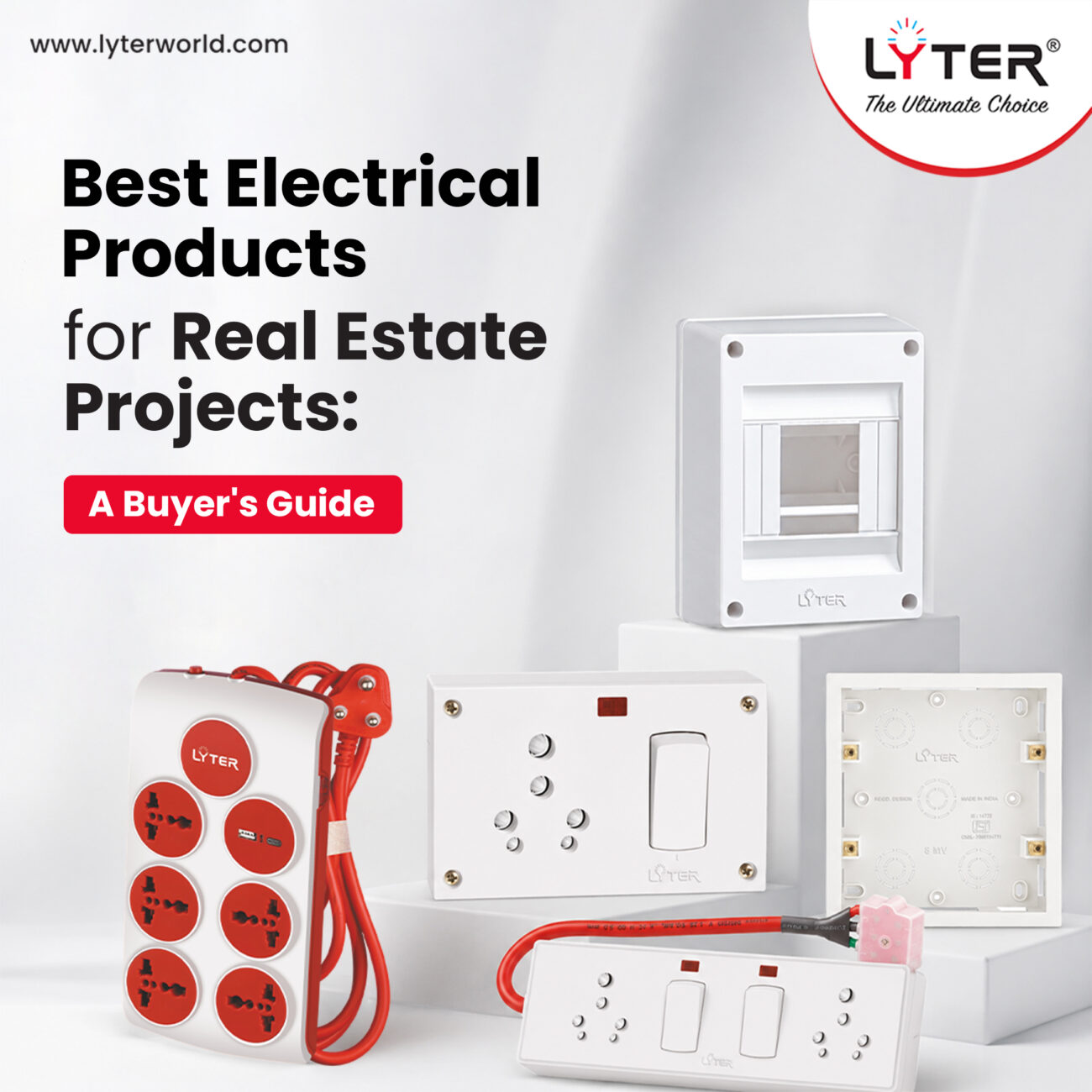
Depending on the project’s requirements, the electrical list may include:
- Modular switches and plates
- Sockets and power outlets
- Lamp holders
- Extension cords and power strips
- Spike guards
- MCB-related accessories
- Wires and cables
- Doorbells and other electrical accessories
The exact combination will depend on the project’s design, electrical load, and intended usage.
Why the Right Supplier Matters
For large projects, consistency is just as important as individual product quality. Developers, contractors, and electricians often need products in significant quantities and across multiple project stages.
A reliable supplier or manufacturer can help ensure consistent specifications, smoother procurement, and products suited to different applications.
Conclusion
Choosing the right electricals product for real estate projects means looking beyond price. Safety, application, compatibility, durability, design, and long-term availability all deserve consideration.
With the right real estate electricals, you can create electrical setups that are practical, dependable, and built to suit the spaces they serve. Brands like Lyter offer a wide range of electrical accessories for different residential and commercial applications.
FAQs
- What electrical products are commonly needed for real estate projects?
Common requirements include switches, sockets, plates, lamp holders, wires, power strips, spike guards, and other installation accessories.
- Should residential and commercial projects use the same electrical products?
Not always. Electrical requirements can vary based on usage, load, installation type, and the nature of the space.
- How can I compare electrical products from different manufacturers?
Compare specifications, safety features, material quality, compatibility, durability, warranty or support, and suitability for the intended application, not just the price.
- Why is consistency important when buying electrical products in bulk?
Consistent products help maintain uniformity across installations and can simplify procurement, installation, replacement, and maintenance.