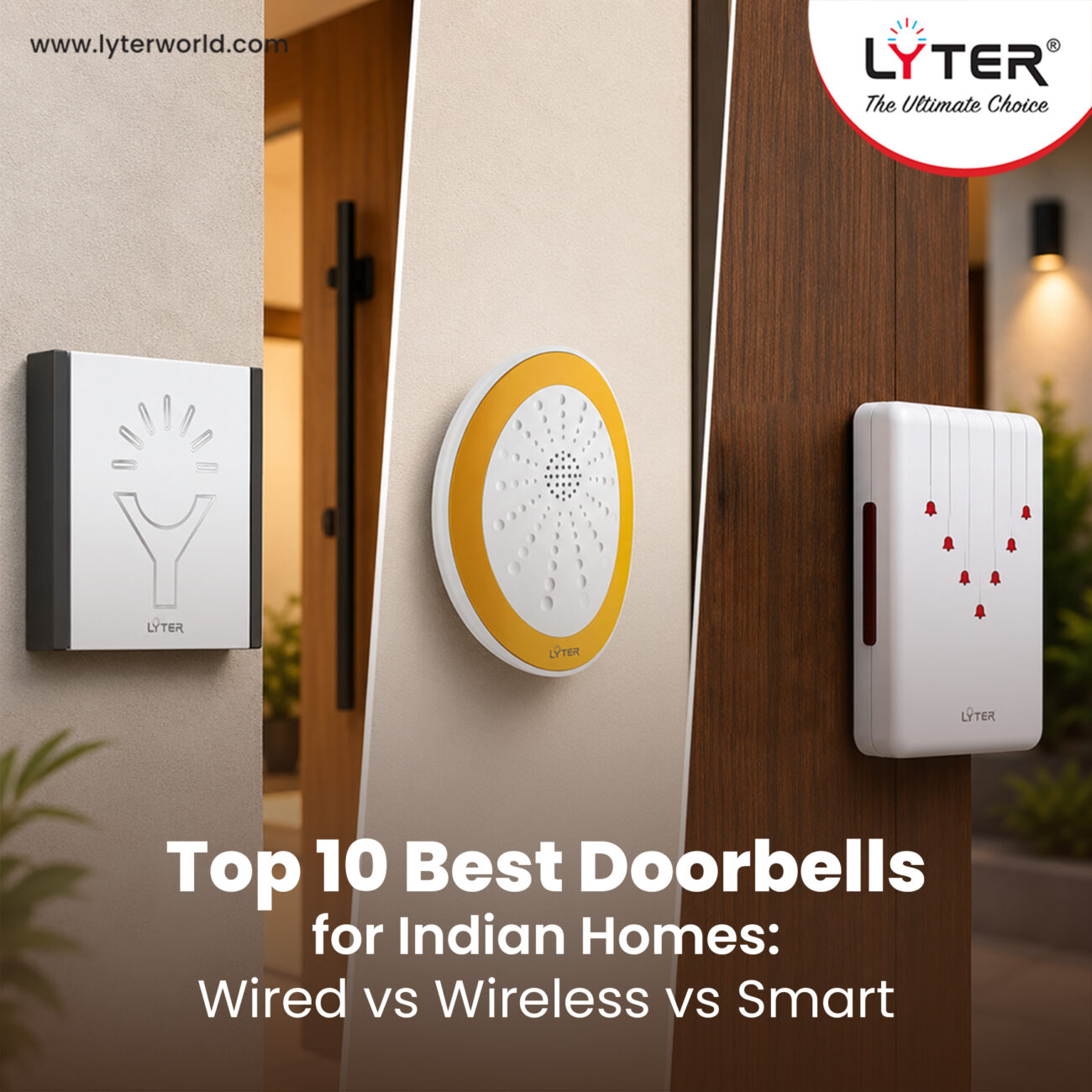
What’s the first thing you notice when someone arrives at your home? Usually, it’s not the knock, it’s the doorbell. A good doorbell should be easy to hear, reliable in daily use, and suitable for the way your home is wired and used.
But with wired, wireless, and smart options available, choosing the right electric door bell for home can get confusing. So, which one should you pick? Let’s break down the options and explore 10 practical doorbell choices for Indian homes.
1. Basic Wired Electric Doorbell
A traditional wired doorbell is connected directly to your home’s electrical wiring. It is simple, dependable, and doesn’t require batteries.
Best for: New constructions and homes where wiring is already available.
2. Electronic Wired Doorbell
These doorbells offer more pleasant electronic chimes than conventional bells and are available in different sound options.
Best for: Homeowners looking for a simple upgrade without switching to wireless technology.
3. Wireless Electric Doorbell
Wireless doorbells use a transmitter at the entrance and a receiver inside the house. Installation is generally easier because there is no need to run wires between the two.
Best for: Rented homes or existing homes where additional wiring is inconvenient.
4. Long-Range Wireless Doorbell
If your house is large or has multiple floors, range matters. Long-range wireless models can help ensure the chime reaches rooms farther from the entrance.
Best for: Villas, duplexes, and larger homes.
5. Multi-Chime Wireless Doorbell
Some wireless systems allow multiple receivers or chime units around the house.
Best for: Homes where one doorbell sounder may not be audible everywhere.
6. Weather-Resistant Doorbell
The outdoor button is exposed to dust, humidity, rain, and temperature changes. A weather-resistant model can be a sensible choice, particularly for entrances that are not fully covered.
Best for: Independent houses, balconies, gates, and exposed entrances.
7. Illuminated Doorbell
These models include a small light or illuminated button, making them easier to locate at night.
Best for: Homes with poorly lit entrances.
8. Smart Wi-Fi Doorbell
Smart doorbells connect to your home network and can offer features such as app notifications, two-way communication, and remote monitoring.
Best for: Homeowners who want connected-home functionality.
However, they generally require more setup than a standard electric door bell and may depend on Wi-Fi and power availability.
9. Video Doorbell
A video doorbell combines the doorbell function with a camera. Depending on the model, you may be able to see visitors through a smartphone or indoor display.
Best for: Security-conscious homeowners who want to identify visitors before opening the door.
10. Modular Electric Doorbell
A modular doorbell can complement modern electrical fittings and switches, making it a good option when appearance matters alongside functionality.
Best for: Contemporary apartments and renovated homes.
Wired vs Wireless vs Smart: Which Should You Choose?
The right choice depends on your home and priorities
| Type | Best For | Main Advantage |
| Wired | Permanent homes | Reliable and low maintenance |
| Wireless | Existing/rented homes | Easy installation |
| Smart | Connected homes | Remote features and notifications |
Before buying, check power requirements, installation method, wireless range, sound level, outdoor durability, and warranty. For wired models, installation should be handled safely by a qualified electrician.
Conclusion
The best doorbell isn’t necessarily the most feature-packed one, it’s the one that fits your home, installation setup, and everyday needs. Whether you choose a traditional electric door bell, a wireless model, or a smart doorbell, focus on reliability and practicality first.
For dependable electrical solutions designed for everyday homes, Lyter is worth exploring as part of your options.
FAQs
- Can a doorbell work during a power cut?
Battery-powered and wireless models may continue working depending on their design, while conventional wired models connected to mains power generally won’t operate without backup power. - Can I install a wireless doorbell myself?
Many wireless models are designed for relatively simple installation, but always follow the manufacturer’s instructions and avoid electrical work beyond your expertise. - How loud should a home doorbell be?
It should be clearly audible from the areas where household members spend most of their time without being unnecessarily loud. - Do smart doorbells work without internet?
Some basic functions may continue locally, but features such as remote notifications, cloud access, or smartphone viewing generally require an internet connection.